

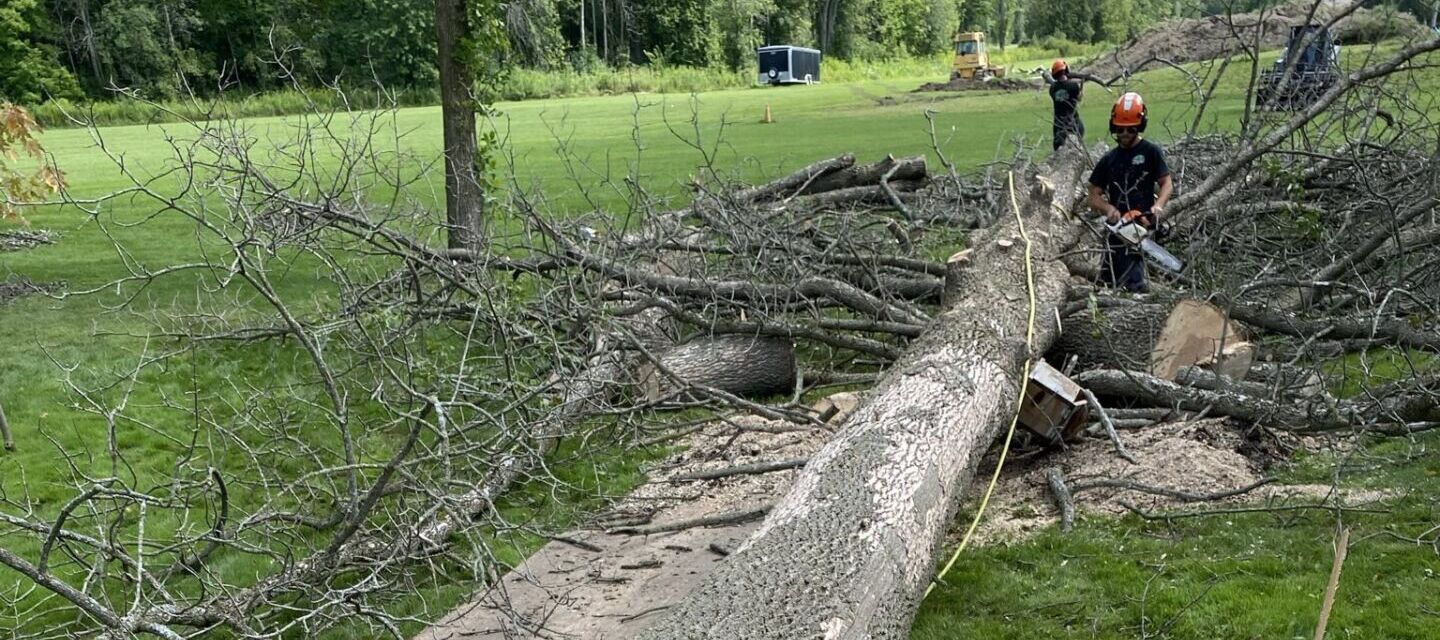
A tree can look “mostly fine” from a distance, even while it’s slowly declining. By the time the damage becomes obvious, it’s often much more advanced than expected.
The fact is, trees don’t always fail overnight. In many cases, they decline gradually, showing subtle warning signs before things get serious. Knowing the signs that a tree is dying can help you act early. Whether that means saving the tree with proper care or safely removing it before it becomes a risk, the team at CBL Tree Service can assess the situation and guide you toward the right next step.
Common Signs a Tree Is Dying
Not every struggling tree is beyond saving, but there are a few clear indicators to watch for:
1. Bare or Thinning Branches
If your tree isn’t producing leaves in areas where it normally would – especially during the growing season – it’s often a sign of stress or decline. A thinning canopy is one of the earliest signs that a tree is dying.
2. Brittle or Falling Branches
Dead branches tend to become dry and brittle. If you notice branches snapping easily or falling without cause, the tree may already have sections that are no longer alive.
3. Cracks or Damage in the Trunk
Deep cracks, splits, or large wounds in the trunk can weaken the tree’s structure and affect its ability to transport nutrients. This kind of damage can accelerate decline if not addressed.
4. Fungus or Rot at the Base
Mushrooms or fungal growth near the base of the tree often point to internal decay. While not always immediately fatal, it’s a strong indicator that the tree’s structural integrity may be compromised.
5. Leaning or Unstable Growth
A sudden lean or shifting root system is a red flag. This can indicate root damage or failure, which often means the tree is no longer stable, especially during storms.
6. Peeling Bark or No Green Underneath
Healthy trees have a layer of green just beneath the bark. If you gently scratch the surface and don’t see green, that section of the tree may be dead. One of the clearer signs that a tree is dying that homeowners can check for themselves.
When Something’s Off, Get CBL on the Job!
If you’re noticing any of these signs that a tree is dying, the best next step is to have it assessed by a professional. It’s not always obvious from the outside whether a tree can be saved, and guessing can lead to unnecessary risk or missed opportunities for treatment.
Here’s how CBL Tree Service can help:
- Tree assessments to determine overall health and safety
- Pruning to remove dead or damaged branches and encourage healthier growth
- Safe removal if the tree is beyond recovery
In many cases, early Tree pruning can make a big difference. Removing problem areas and giving the tree a better chance to thrive.
If something doesn’t look right, trust your instincts and have it professionally checked out. Owner Joe Corkery will walk through your property with you first, assess the situation in person, and make sure you understand your options before giving you an estimate. Reach out to us today!